
In the window hardware fitting system, Friction stays and wind braces are both key components that ensure the performance of windows. They work in coordination to safeguard the safety of windows, enable smooth opening and closing operations, and provide users with a high-quality experience in using windows. Below, we will introduce in detail the differences between Friction stays and wind braces, as well as their respective uses.
What is Friction Stays?
Friction stay, also known as 4 bar window hinge, is a link-type movable connecting device used to connect the window sash and the window frame, enabling the window to be opened and closed. It is mostly made of stainless steel.
There are mainly two types of Friction stays on the market: one is the 4 bar Friction stays used for casement windows. It can not only limit the position but also bear the weight of the window sash; the other type is used for awning windows and only undertakes the function of bearing the weight. These two types of Friction stays are installed at the upper and lower ends of the window sash to support the window sash during opening and closing.
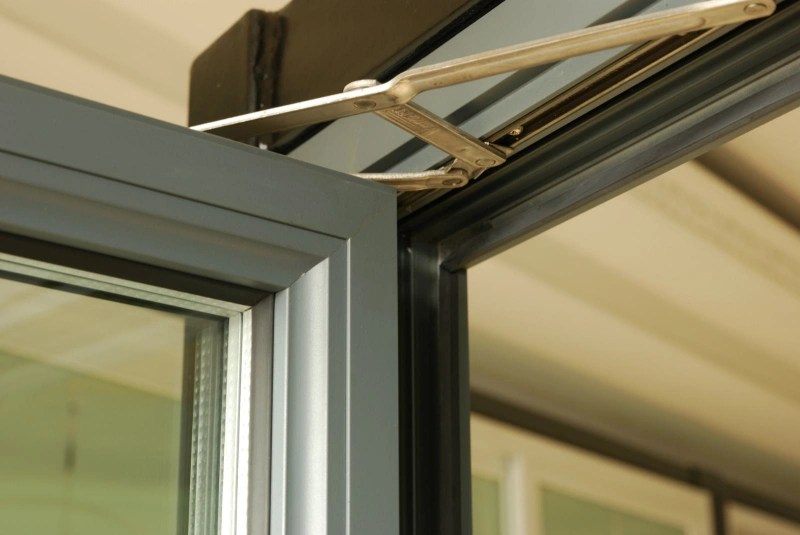


What is Wind Braces?
Wind Braces, also known as 2 bar window hinge, are mainly used for position limitation. When the window sash is opened to a specific position, the wind brace can keep the window sash stable and prevent it from moving randomly due to factors such as wind. They are commonly used in the casement windows of office buildings.


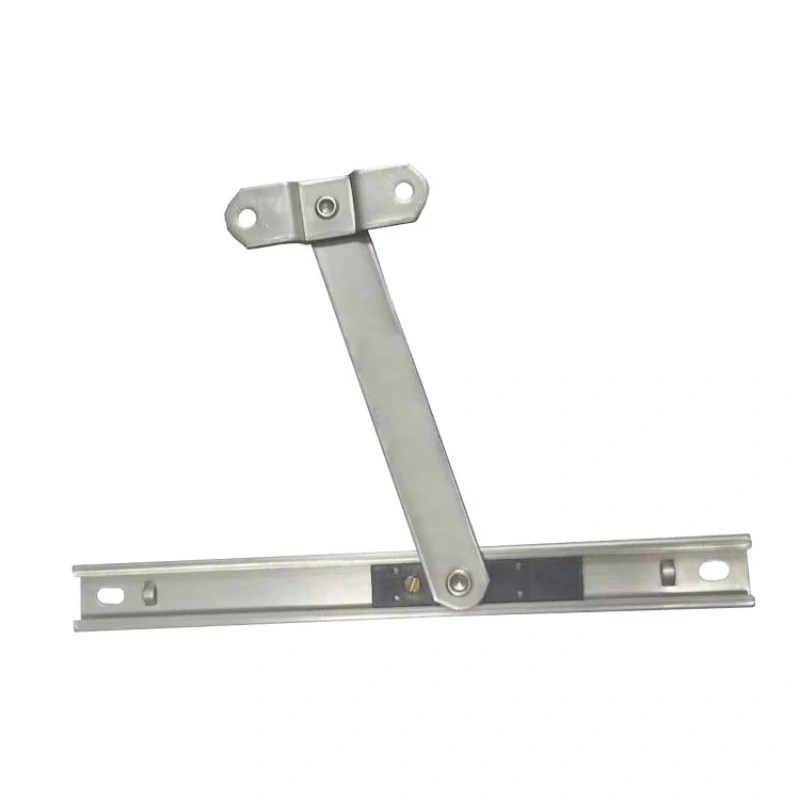
When actually choosing between a wind brace and a Friction stays, various aspects need to be comprehensively considered.
Differences between Friction stays and Wind Braces
- Difference in installation position: Taking an awning window as an example, the Friction stay is generally installed at the upper corner of the window, while the brace is installed at the lower corner or the middle-lower part of the window.
- Difference in functional application: The Friction stay plays a crucial role during the movement of the window sash. It not only supports the movement of the window sash but also maintains the open state of the window sash. It is the main load-bearing member throughout the process, so it is not suitable for the installation of aluminum alloy doors. In contrast, the wind brace only functions when maintaining the open angle of the window, and the force it bears is relatively small (the magnitude of the force can be calculated through the principle of moment equilibrium).
- Flexibility of installation position: For the same window, the installation position of the Friction stay is relatively fixed; while the installation position of the wind brace can be adjusted within a large range at the lower part of the window. The length of the wind brace and its installation position jointly determine the range of the open angle of the window sash.