
Friction stay, also known as 4 bar window hinge, is a link-type movable connecting device used to connect the window sash and the window frame, enabling the window to be opened and closed. It is mostly made of stainless steel.

The following is a detailed introduction to the Friction stay:
- Structural Composition:
- Slide Rail: A track installed on the window frame that plays a role in carrying the movement of the sliding block.
- Sliding Block: A part in the slide rail that plays a role in guiding the movement.
- Support Arm: A part used for installing the window sash and serving as a supporting function.
- Cantilever: A part used to connect the support arm and the slide rail, including a long cantilever, a short cantilever, and an inclined cantilever. The long cantilever is hinged between the slide rail and the support arm, the short cantilever is hinged between the sliding block and the support arm, and the inclined cantilever is hinged between the sliding block and the long cantilever.
- Corner Cover: A part installed at the end of the slide rail, which plays a role in fixing the support arm when the Friction stay is closed.
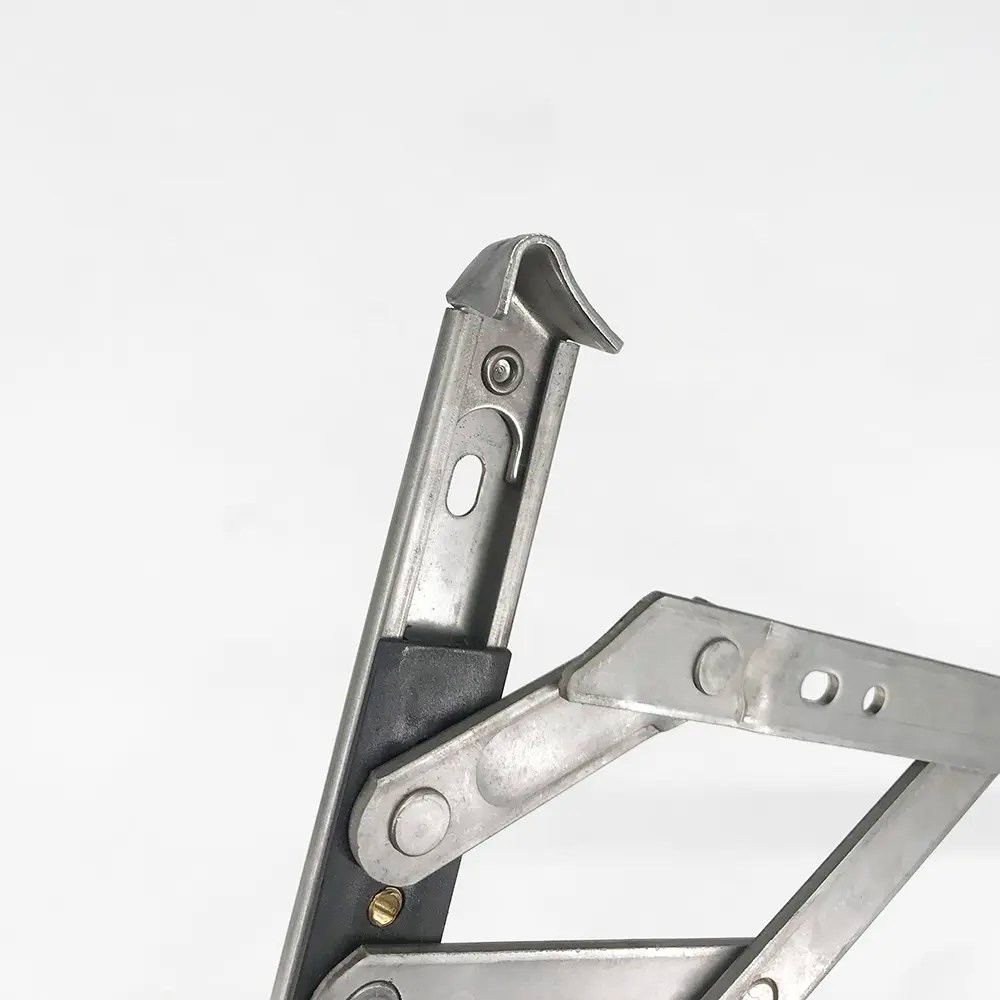
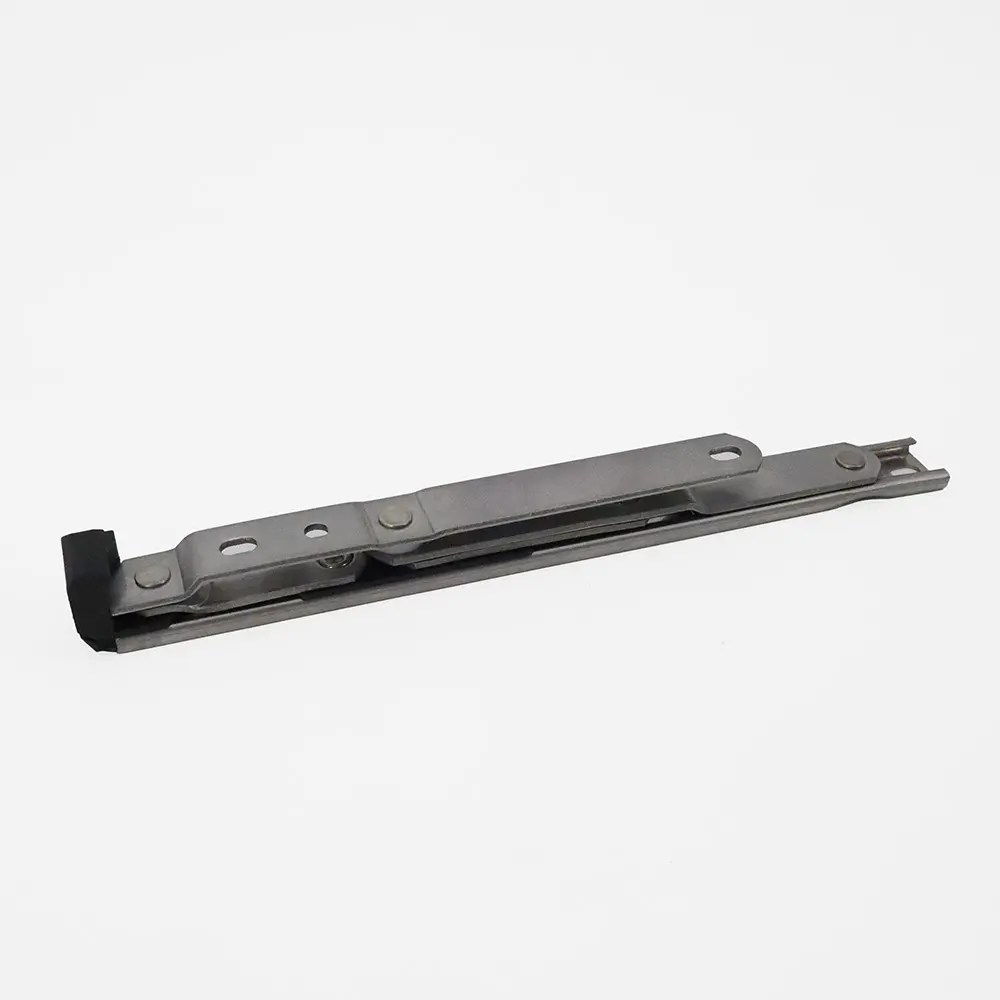

- Working Principle: Through the sliding of the sliding block on the slide rail and the rotation of the cantilever, the opening and closing of the window sash are realized. During the opening process, the sliding block slides upward along the slide rail, driving the rotation of the cantilever, so that the window sash rotates around the hinge or pivot on the window frame to open the window sash. During the closing process, the sliding block slides downward along the slide rail, the cantilever rotates in the opposite direction, and the window sash gradually closes.
- Functions:
- Support the Window Sash: Bear the weight of the window sash to ensure that the window sash remains stable during the opening and closing process and will not fall or shake due to its own weight.
- Enable Window Opening and Closing: Make it convenient for the window to be opened and closed to meet the needs of ventilation, lighting, access, etc.
- Position the Window Sash: Some Friction stays have a positioning function, which can keep the window sash fixed at a specific opening angle, allowing users to adjust the opening degree of the window as needed and maintain this state.

- Installation Position: The Friction stay is generally installed at the upper and lower ends or the left and right sides of the window sash, and the specific position depends on the type and design of the window. For casement windows, the Friction stay is usually installed at the lower part of the window sash near the hinge; for awning windows, the Friction stay is installed on the side of the window sash.
- Selection Precautions:
- Select According to the Window Type and Size: Different types and sizes of windows require the selection of corresponding specifications of Friction stays to ensure that they can bear the weight of the window sash and meet the requirements for opening and closing.
- Consider the Load-Bearing Capacity: The load-bearing capacity of the Friction stay should be greater than or equal to 1.3 times the total weight of the window as a safety factor to ensure the safety of the window during use.
- Choose High-Quality Products: High-quality Friction stays have better corrosion resistance, wear resistance, and stability, which can extend the service life of the window.
- Pay Attention to Installation Details: When installing the Friction stay, it should be installed in accordance with the requirements of the product instruction manual to ensure firm and flat installation and avoid problems such as looseness and deformation.